Skip to content
FPSTracker
Apex Legends · Battle royale
FM-APE / ELECTRONIC ARTS

The Apex Tracker Reference for Legends Stats, Leaderboards and Ranks

Apex Legends is the only game covered here that does not really keep account-level statistics. It keeps per-legend statistics, and only for the trackers a player had equipped at the time. Every apex tracker page inherits that structure, which is why per-legend figures and account totals so often refuse to add up.

Apex Legends · Record

What Apex Legends Publishes

SPEC / PLATE
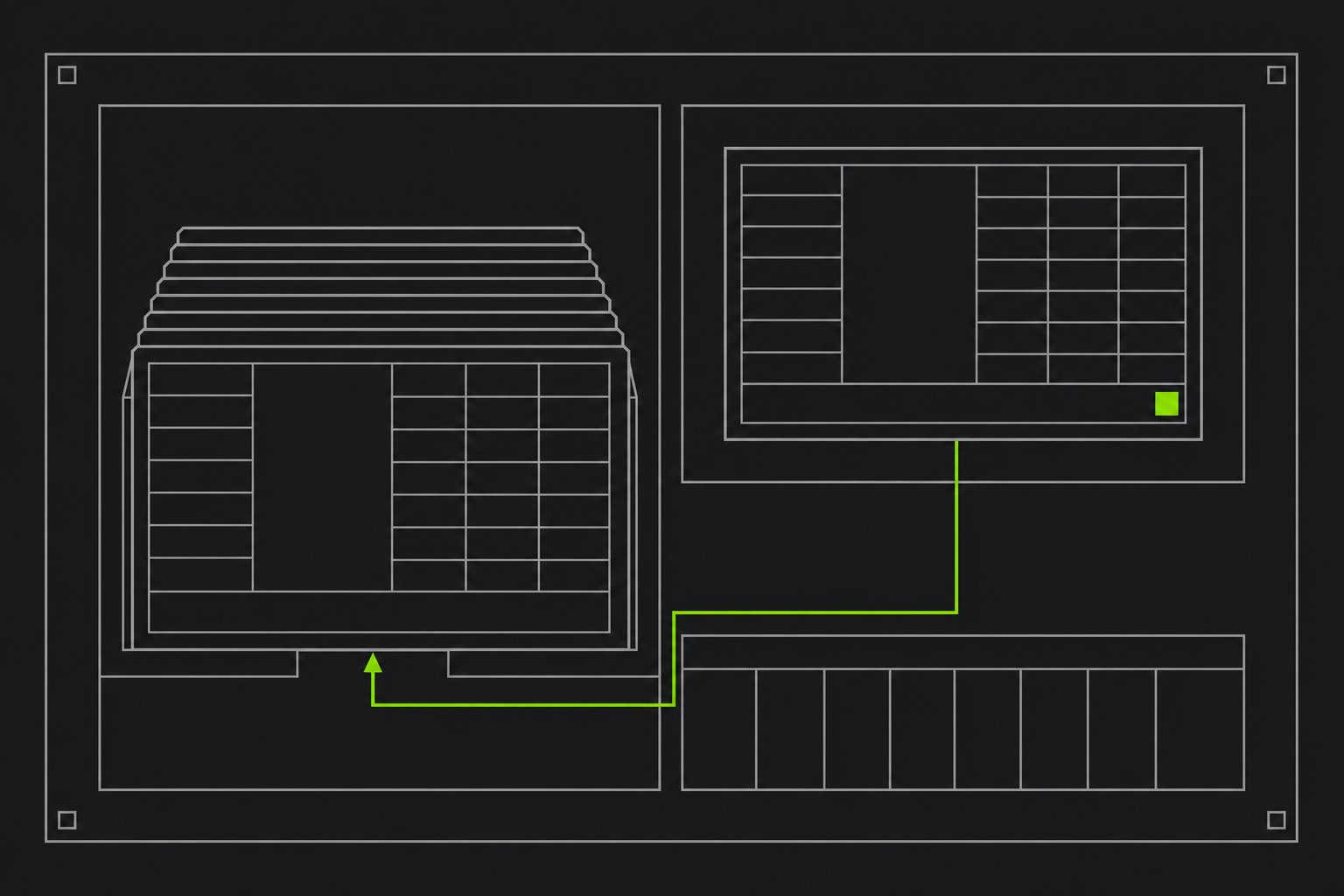
Schematic plate showing how Apex Legends records and publishes player statistics
Fig. 1 — the shape of what Apex Legends publishes. Structure, not data: the figure illustrates the recording model described below.
  • PublisherElectronic Arts
  • Released2019
  • Ranked systemRanked Points (RP)
  • Headline figuresKills · KD ratio · Damage per match · Wins · Ranked points
Reference

What an Apex Tracker Reads: Per Legend, Per Equipped Tracker

SOURCE / 01

In Apex, a statistic is attached to a legend rather than to the account, and it only accumulates while a tracker for it is equipped on that legend. Three tracker slots exist per legend. A player who never equipped a damage tracker on Wraith has no Wraith damage history, and nothing about the missing figure indicates that it was never collected rather than never earned.

That is the structural fact behind the most common complaint about any apex legends tracker: an account showing four hundred kills on one legend and nothing at all on another it has clearly played for a season. Both readings are accurate. One legend had a kill tracker equipped and the other did not.

It also means an apex tracker cannot audit itself. A missing figure and a zero figure look the same from outside, and only playtime distinguishes them.

So the apex stats on any page are bounded by a choice the player made months earlier, and no page can tell you which choice that was. EA publishes the per-legend record, which is what makes per-legend comparison possible at all — and it is genuinely useful, because Apex legends differ enough that a player can be strong on one and weak on another. What cannot be reconstructed is a complete account history, because the gaps are not recorded as gaps.

Reference

Ranked Points, Splits and How the Apex Leaderboard Is Built

COMPARE / 02

Apex ranks on Ranked Points. Rookie through Diamond each carry four divisions, Master is an RP threshold rather than a division, and Apex Predator is the top 750 accounts per platform, recalculated continuously. Predator is therefore a live position, not a tier that is held: the cutoff moves throughout the day as other players gain RP.

The entry cost is the mechanic that makes this ladder different from the others on this site. Every ranked match costs RP to enter, and the cost scales with tier, so a Diamond player pays substantially more per match than a Gold player. At high tiers a player can place well, kill several opponents and still lose RP. That is by design, and it means RP measures net performance against a rising bar rather than gross output.

RP resets at the start of each split. A peak rank without its split attached is not a comparable claim, and because Apex Predator is a live cutoff rather than a rating, a former Predator and a current one are not the same statement even inside one split.

  1. 01 Rookie
  2. 02 Bronze
  3. 03 Silver
  4. 04 Gold
  5. 05 Platinum
  6. 06 Diamond
  7. 07 Master
  8. 08 Apex Predator
LADDER

Ranked Points (RP). Rookie through Diamond hold four divisions each. Master is an RP threshold and Apex Predator is the top 750 accounts per platform, recalculated continuously. RP resets at the start of each split, with the entry cost scaling by tier.

The share of players sitting in each tier moves every season, so no fixed percentage is printed here, because a number published once would be wrong within weeks. The order is the part that holds.

Reference

Why an Apex Stat Tracker Splits Everything by Legend

RANK / 03

An apex stat tracker that flattens everything to one account-wide row has thrown away the most useful property of the data. The per-legend structure is not an inconvenience to work around — it is the most informative thing about the data. Legends have different hitboxes, different mobility and different roles, and performance genuinely varies between them for the same player. A single account-wide K/D would average across those differences and hide the one thing worth knowing.

The practical reading is therefore per legend, with playtime beside it. A 2.0 K/D across forty games on one legend says something. The same figure across four games says nothing. Because the tracker slots limit what is collected, playtime is also the only way to tell a genuine gap from an uncollected one.

This is also where the published apex stats are at their most reliable: a per-legend figure with playtime beside it is a real measurement of a real sample. A second consequence is that account totals published by third parties are reconstructions. They are sums of whatever per-legend figures happened to be collected, and they are systematically lower than reality for any player who has changed their equipped trackers. Treat an account-level Apex figure as a floor rather than a measurement.

What each figure leaves out

The seven recurring figures, the formula behind each one, and the list of things it does not count.

K/D ratio = kills ÷ deaths

A 1.4 in a tactical shooter and a 1.4 in a 64-player mode are not comparable numbers. Read K/D against the mode first, the rank second, and never on its own.

Not included in this number

  • Assists and downs that someone else finished
  • Whether the kill was a trade or an opening pick
  • Round-win contribution
  • Casual and ranked pools, which most pages merge

Win rate = wins ÷ matches played

Below roughly 50 matches a win rate is noise. In squad modes it is closer to a measure of who the player queues with than of how they play.

Not included in this number

  • Sample size
  • Whether the player queued solo or in a stack
  • Abandoned and re-queued matches
  • Placement matches, which several games weight differently

Matches played = count of recorded matches

This is the number that tells you whether any of the others mean anything. Read it first.

Not included in this number

  • Matches played before the current stats system
  • Matches recorded while the profile was private
  • Modes the game does not track
  • Matches on other platforms for accounts that were not linked

Damage per round = total damage ÷ rounds played

The most honest single number in tactical shooters, and the most misleading one in battle royales, where plate-breaking pads it.

Not included in this number

  • Whether the damage led to a kill
  • Utility and grenade damage in some games but not others
  • Damage to non-player targets
  • Overkill damage past zero health

Ranked tier = a band on the game's own rating ladder

The most authoritative figure available and the one most often shown stale. Check when it was last refreshed before believing it.

Not included in this number

  • Refresh lag between the game and the page showing it
  • Which playlist or role the badge came from
  • Seasonal resets that have already happened
  • Whether placements are complete

Peak rank = highest tier reached, per season

Useful only with the season attached. A peak from a season with different tier boundaries is a different achievement wearing the same name.

Not included in this number

  • Seasons before the current system
  • Beta and pre-release periods
  • Peaks on unlinked accounts
  • Tier boundary changes between seasons

Headshot percentage = headshot kills ÷ total kills

Read it per weapon or not at all. An account-wide headshot percentage mostly reports which guns the player likes.

Not included in this number

  • Every shot except the last one
  • Weapons with no headshot multiplier
  • Explosive and vehicle kills
  • Hero abilities that ignore hit location
Reference

Which Apex Legends Stats Compare Between Two Players

BOARD / 04

An apex stat tracker holds three figures worth comparing and one worth ignoring. Damage per match is the strongest comparable figure in this game, provided both accounts are read on the same legend or on legends of similar role. It is less sensitive than K/D to third-partying, which is endemic in Apex, and it is collected by the tracker most players equip first.

Neither the in-game leaderboard nor a third-party leaderboard changes that, because both rank RP rather than output. Current RP compares cleanly within a split, since everyone in that split pays the same entry costs. Win rate compares poorly: a twenty-squad lobby produces a low win rate for almost everyone, and the differences between good and excellent players sit inside a range narrow enough that sample noise dominates it below several hundred matches.

Kills is the figure to distrust most here. It is capped by what was equipped, inflated by third-party finishes, and merged across legends with different roles. An apex legends tracker leading with lifetime kills is leading with the weakest number it holds.

max 1,000,000
max 1,000,000
max 100,000
max 100,000
max 100,000,000
max 1,000,000
  • K/D ratio kills ÷ deaths
  • Win rate wins ÷ matches
  • Damage per round damage ÷ rounds
  • Kills per match kills ÷ matches
READ IT AS

A ratio is only worth reading next to the match count that produced it. Below roughly fifty matches, every figure on this bench is noise.

Reference

Reading an Apex Legends Profile Without Being Misled

READ / 05

An apex tracker page can be read correctly in four steps, and the first one is the one people skip. Read per legend, never account-wide. Put playtime next to every ratio, both to size the sample and to detect uncollected gaps. Check the split a rank or peak belongs to. And treat any account-level total as a lower bound rather than a figure.

The Predator leaderboard is the one place where a position, not a rating, is the whole claim. For a Predator claim there is a fifth: ask whether it is current. The cutoff is recalculated continuously, so the position is genuinely held only at the moment it is read, and a cached page can show a Predator badge for an account that dropped out of the list hours earlier.

Questions

Apex Legends stats: frequently asked questions

FAQ / 09

Why does my Apex profile show no stats for some legends?

Because statistics only accumulate while a tracker for them is equipped on that legend, and there are three slots per legend. A legend played for a whole season without the relevant tracker equipped has no history for it, and the absence is indistinguishable from never having played.

Why do per-legend figures not add up to the account total?

Account-level totals published by third parties are reconstructions, sums of whatever per-legend figures happened to be collected. Any player who has changed their equipped trackers will show an account total below reality. Read it as a floor, not a measurement.

How many ranked tiers does Apex have?

Eight: Rookie, Bronze, Silver, Gold, Platinum, Diamond, Master and Apex Predator. Rookie through Diamond carry four divisions each. Master is an RP threshold, and Apex Predator is the top 750 accounts per platform, recalculated continuously.

Why did I lose RP after placing well?

Because every ranked match costs RP to enter and the cost scales with tier. At high tiers a good placement with several kills can still be a net loss. RP measures performance against a rising bar rather than raw output, and that is deliberate.

Is Apex Predator a rank you keep?

No. It is the top 750 accounts on a platform, and the cutoff moves continuously as other players gain RP. It is a live position rather than a tier, so a cached Predator badge can outlive the placement it describes by hours.

Which single Apex figure is most worth reading?

Damage per match, read on one legend with playtime beside it. It resists third-partying better than K/D, it is collected by the tracker most players equip first, and per-legend reading avoids averaging across roles that are not comparable.